
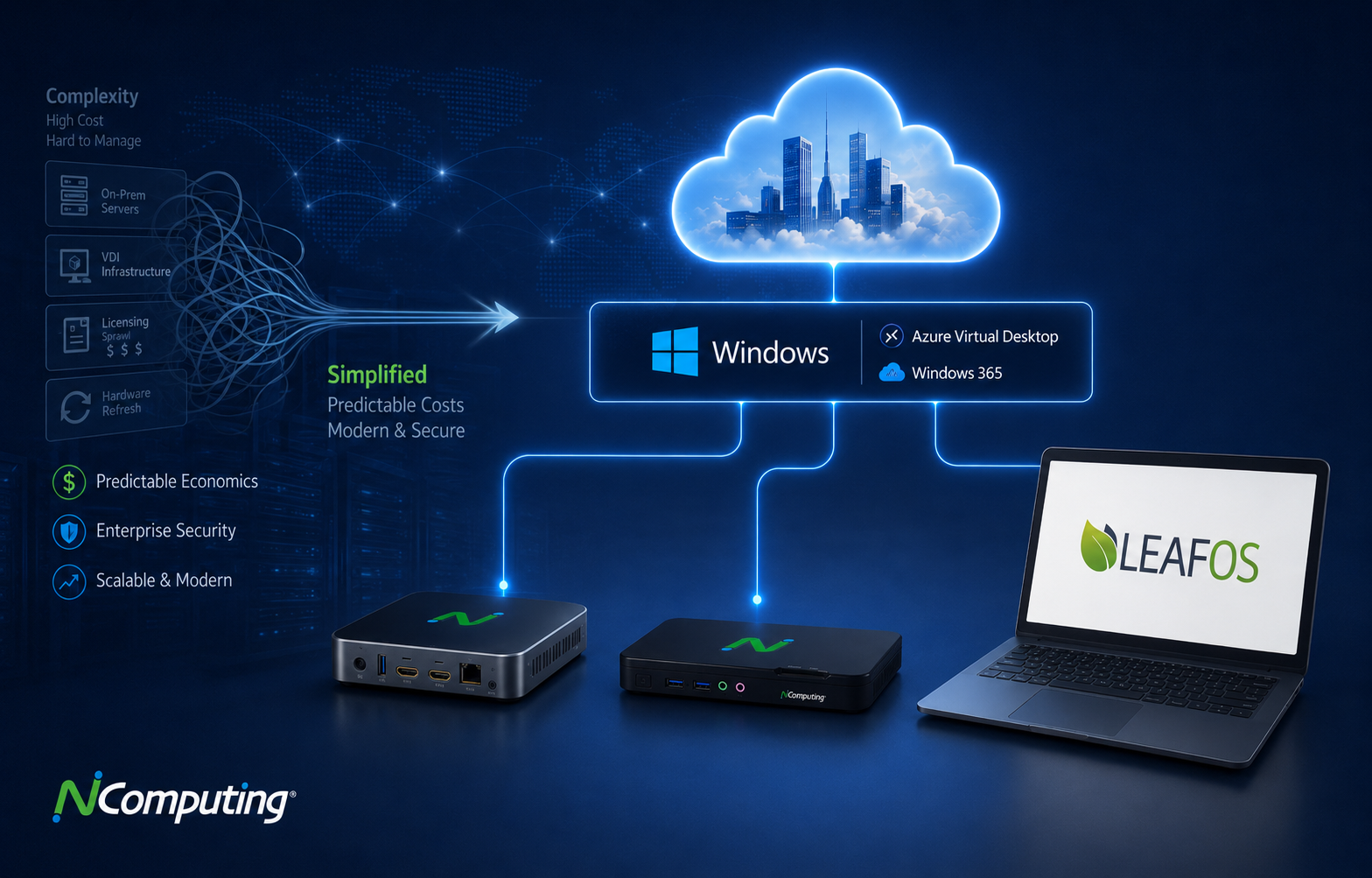
As licensing uncertainty, renewal pressure, and compliance risk influence architecture decisions, IT teams need a clearer path to Azure Virtual Desktop and Windows 365.
Modern end-user computing decisions are no longer driven only by performance, density, or manageability. For many IT teams, the greater challenge is predictability.
Predictable costs. Predictable renewals. Predictable outcomes.
When licensing is difficult to forecast, migration planning becomes harder. When renewal terms introduce uncertainty, budgets become more fragile. And when compliance exposure begins influencing technology decisions, organizations naturally look for simpler and more transparent operating models.
That is the issue behind many virtualization conversations today.
This is not about blaming any one vendor. It is about recognizing that complexity carries a cost. Time spent interpreting licensing rules, preparing for contract changes, or defending renewal decisions is time that cannot be spent improving user experience, supportability, and business outcomes.
As a result, many organizations are reevaluating their end-user computing strategies. Some are moving toward Azure Virtual Desktop. Others are standardizing on Windows 365. Many are considering a combination of both.
Windows 365 provides a streamlined, managed Cloud PC model with predictable per-user provisioning. Azure Virtual Desktop offers greater flexibility for organizations that need more control over deployment models, configurations, and infrastructure economics. The right choice depends on the workload, user profile, security requirements, and operational model.
Regardless of the platform selected, the environment must remain understandable.
IT leaders do not simply need technology that works. They need an architecture they can explain, budget for, support, and sustain.
That is where NComputing fits in.
NComputing LEAF OS enables secure access to AVD, Windows 365, and other popular VDI/DaaS workspaces. Together with PMC, it helps reduce licensing complexity, avoid unnecessary capital expenses, and lower total cost of ownership by extending the useful life of existing devices. Flexible perpetual or subscription licensing gives organizations greater control over how endpoint costs align with their operational and financial requirements.
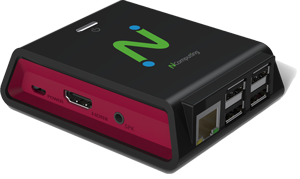
Centralized management and zero-touch deployment provide one consistent platform across repurposed PCs and NComputing EX and RX thin clients. This can simplify administration, reduce operational overhead, and improve overall TCO across distributed environments.
Modernization, therefore, does not have to mean starting over. It can mean making better use of the hardware, skills, and infrastructure already in place.
That is increasingly important for IT teams under pressure to support hybrid work, manage distributed endpoints, and reduce operational friction without adding another layer of licensing or support complexity.
The best infrastructure strategy is not necessarily the most impressive one on paper. It is the one the organization can understand, trust, and operate effectively over time.
Whether an organization is adopting Azure Virtual Desktop, evaluating Windows 365, or combining the two, the objective should remain the same: reduce uncertainty, preserve flexibility, and make the end-user computing environment easier to manage.
If modernization is intended to simplify IT, the right architecture should remove complexity—not relocate it.